
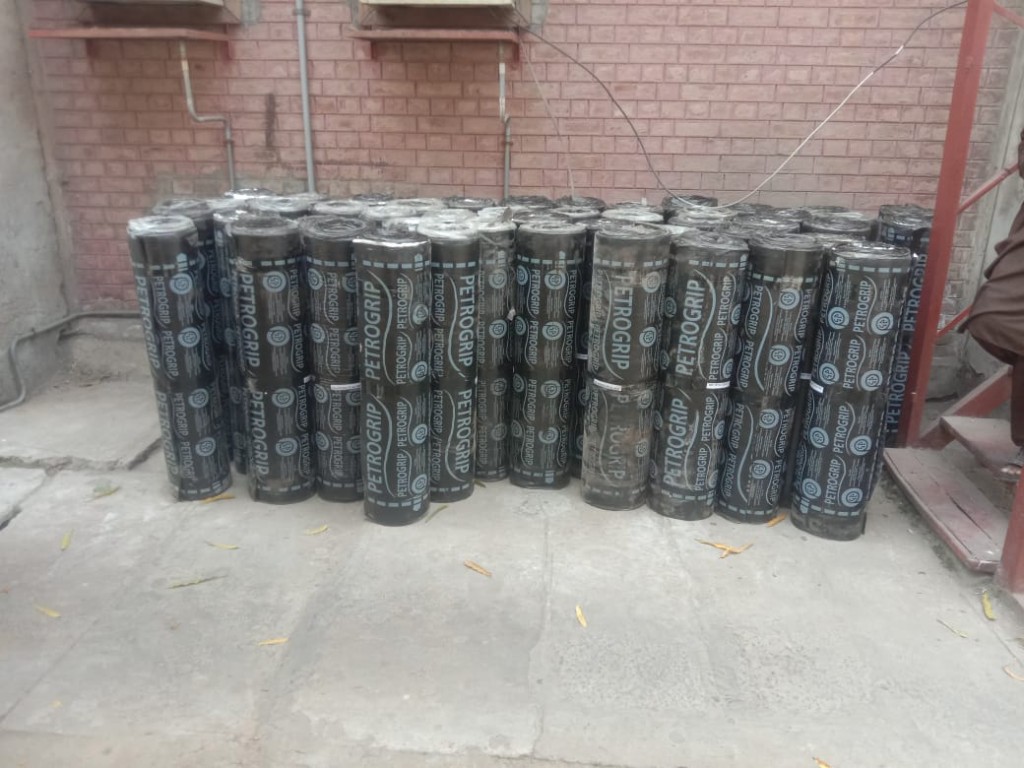
When cold-applied membrane beats a torch on site
Self-adhesive bitumen membrane eliminates open flame on congested slabs—bathrooms, kitchens, stair landings, elevator machine rooms, and hospital wards where propane torch work is restricted or unsafe. PetroSelfGrip sheets from Petroseal Enterprises carry a rubberized bitumen compound on the underside and a removable release film. The applicator peels, positions, and presses; laps are rolled firm and sealed per detail.
Developers increasingly specify PetroSelfGrip for wet-area pods while keeping torch-applied APP or SBS on the main roof field. Petroseal manufactures both families in Lahore so one brand covers the whole building envelope.
Thickness: 1.5mm vs 2mm
| Gauge | Typical use |
|---|---|
| 1.5mm | Internal wet rooms, utility areas, light detailing under tile |
| 2mm | Terraces, bathrooms with outdoor exposure, repair zones, pre-finish weathering |
On residential terraces, 2mm full-field sheets with upturns at parapets and door thresholds form a continuous pan when corners and pipe penetrations are patched from the same roll.
Substrate preparation
Bond strength depends on a clean, dry, sound substrate. New concrete should be cured and free of laitance; old slabs need grinding where paint, oil, or loose mortar exists. Do not stick membrane over standing water or green concrete—blistering follows within weeks.
Corners at wall-floor junctions should be coved or filleted before membrane so the sheet does not bridge a sharp ninety-degree angle under tension.
Bathrooms and wet rooms
Full-floor membrane under the tile bed, with sheets turned up at least 150mm on walls (higher at shower zones per consultant detail), contains migration water even when grout joints age. Partition walls between bathroom and bedroom should carry the membrane upturn on the wet side.
PetroSelfGrip has been used on institutional projects alongside torch membrane on main roofs—one manufacturer, mixed by zone.
Terraces: slopes, upturns, and protection
Terraces need positive fall to drains before membrane. After membrane, use a compatible protection board or screed bed before porcelain or stone so construction carts do not puncture the sheet.
Where the terrace meets a torch-applied main roof, show a lap sequence in the drawing—bond PetroSelfGrip to torch membrane with primer and overlap width defined.
Storage and common mistakes
- Store rolls in shade; heat softens adhesive and makes release film harder to strip.
- Do not stop membrane at the shower curb—continue under benches and curbs.
- Roll lap pressure at seams; avoid generic tape instead of proper overlaps.
- Keep PetroGrip/PetroSelfGrip through the stack for primer compatibility at transitions.
For submittals and pairing with APP or SBS on the same project, contact Petroseal at 0321 8489737 or petrosealenterprises.com.